About this course

Build your skills in advanced chemical management

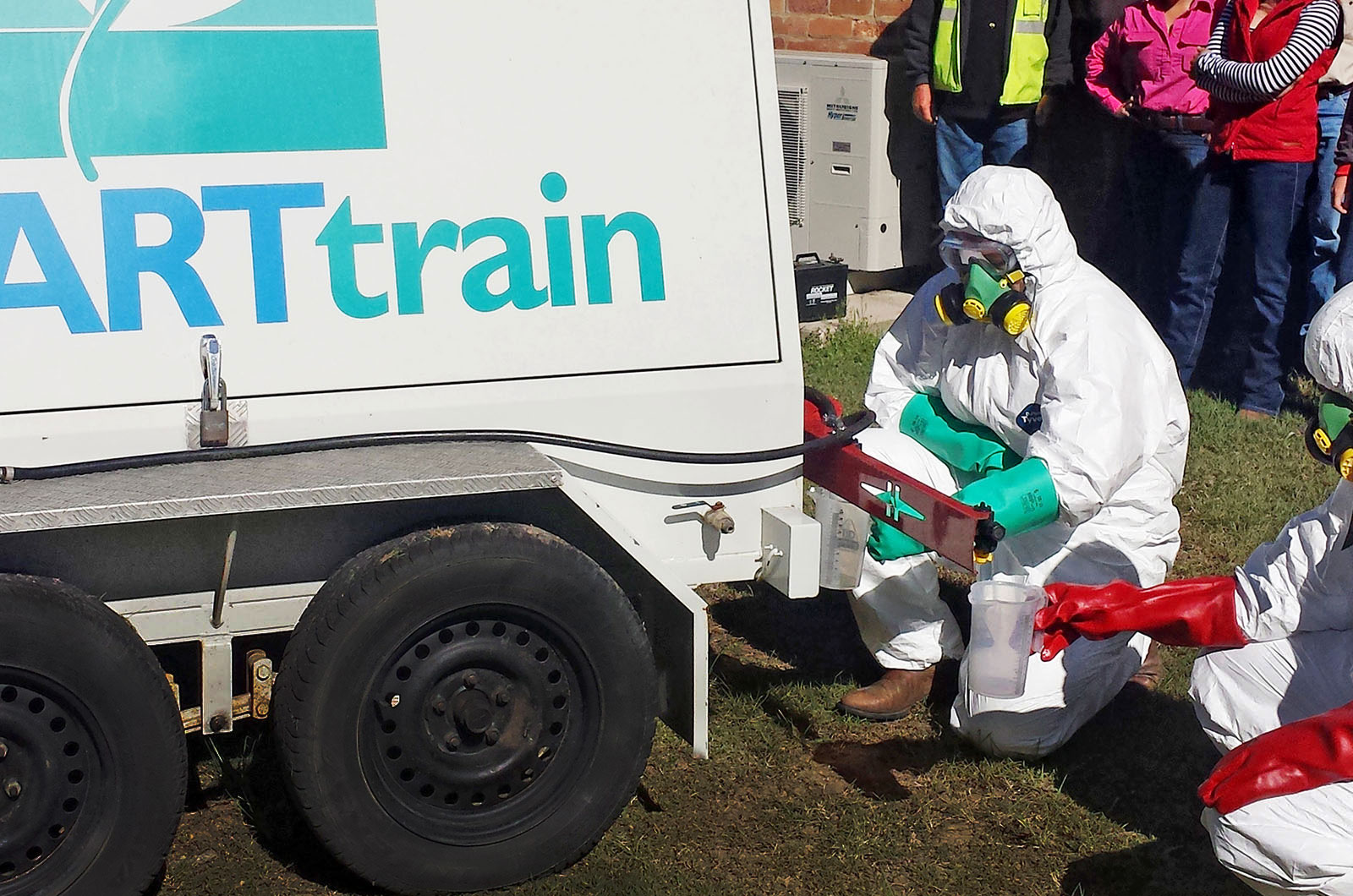
Managing agricultural chemicals involves more than applying them safely. You also need to understand the risks, meet legal requirements and have the right procedures in place to protect workers, property and the environment. This SMARTtrain® Level 4 course will help you develop the skills to manage chemical use programs and establish safe, compliant workplace practices.

You’ll learn how to:

  • identify and manage risks associated with chemical use in the workplace
  • understand and apply relevant legislation to chemical activities
  • develop procedures for safe chemical handling and use
  • prepare for emergencies involving chemicals
  • maintain accurate chemical use records and documentation.

Designed for people working in agriculture, horticulture and land management, this course will help you build your confidence in managing chemical use, improving workplace safety and meeting relevant requirements.

Is this course right for me?

Before registering, check that this course suits you. You’ll need to be at least 16 years old and have prior competency in Chemical Application – Level 3, which is a prerequisite for attending this course. You should be comfortable following safety instructions and participating in activities involving chemical risk management. If you meet these requirements and want to develop your skills in advanced chemical management, click on the register now button.

At a glance:

Location: Statewide
Course duration: 1.5 days
Start date: Multiple intakes, enquire now for next available course
Number of units: 2
Indicative fees: $450 GST-free, nil to eligible applicants
Accredited Course: Yes

Details

  • Legislation
  • Risk management including WHS, environment and application
  • Emergency preparedness
  • Record keeping

$450 GST-free

  • Legislation framework
  • Hazards and risk identification
  • Implementing risk controls
  • Emergency management
  • Records and review

  • Participants will receive the following resources:
    • Reference manual
    • Written assessment
    • NSW State legislation supplement (if relevant)
    • Calibration and records supplement.
  • This course is delivered face-to-face over 1.5 days with a post workshop project (approx. 4 hours)

Participants must:

  • Have successfully completed Chemical Application – Level 3 (or equivalent level chemical card accreditation) prior to attending this course (proof of prerequisite qualification required).
  • Be involved in (or stepping into) managerial, supervisory, or property management roles overseeing chemical storage, handling, risk management, and record-keeping operations across agriculture, horticulture, or land management enterprises.
  • Be comfortable reviewing legislative frameworks, developing Standard Operating Procedures (SOPs), and managing workplace WHS compliance systems.

Language, Literacy, Numeracy, and Digital Capability Requirements

To complete this course successfully, participants will need:

  • Reading: Interpreting complex state and federal chemical legislation, Work Health and Safety (WHS) regulations, detailed Safety Data Sheets (SDS), workplace chemical audit reports, and environmental risk assessment frameworks.
  • Writing: Drafting workplace chemical management plans, emergency response procedures, risk assessment matrices, standard operating procedures (SOPs), and auditing record-keeping systems.
  • Numeracy: Interpreting chemical storage threshold quantities, calculating enterprise-wide chemical consumption, verifying complex equipment calibration formulas, and auditing application logs.
  • Oral Communication & Hearing: Communicating effectively with staff, contractors, regulatory inspectors, and emergency services personnel, conducting WHS safety briefings, and leading workplace risk assessments.
  • Digital Literacy: Basic to intermediate computer skills.

This course is mapped to the following national units of competency:

Note: In some states and territories, it is a legislative requirement for people using chemicals unsupervised to be accredited. Check with your state/territory authority for advice.


Additional Information

  • For information on students rights and responsibilities see our Policies.
  • Note: in some states/territories, it is a legislative requirement for people using chemicals unsupervised to be accredited.


Related courses